
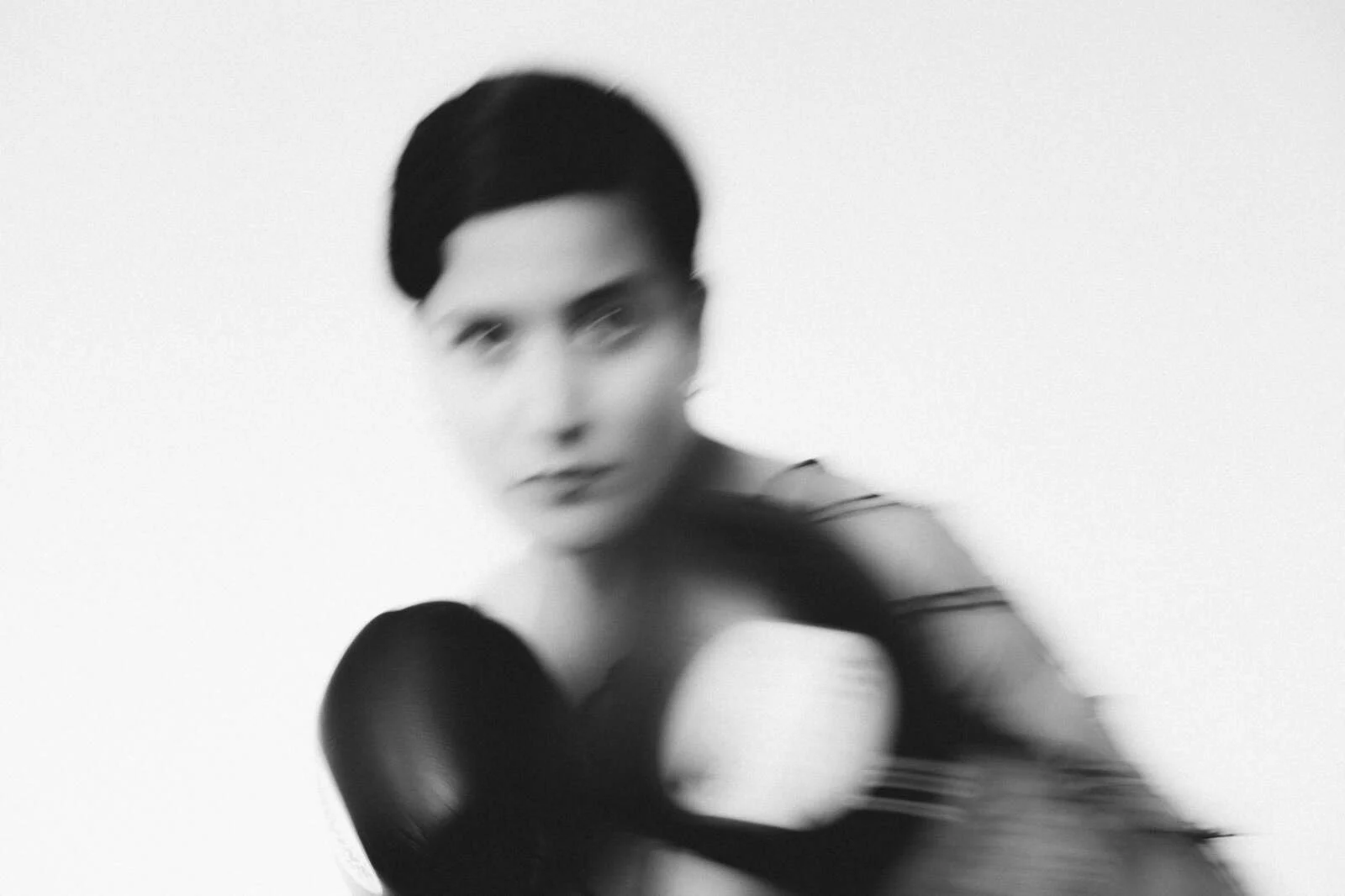
Exhibition opening on Thursday January 8th at 6-9pm
Atoosa Farahmand & Oscar Hagberg
Not A Typical Persian Girl
نه یک دختر ایرانی معمولی
08.01.2026 - 08.02.2026
At the beginning of the 20th century, the women’s movement grew by leaps and bounds in Iran. It reached its height between 1962 and 1978, when the Iranian Women’s Movement won many victories, including the institution of laws giving women the right to vote and to take part in public office. But when the Iranian Revolution ended in 1979 and Ayatollah Khomeini took power, the veil was introduced – an Islamic uniform for women. It was the first attack on women’s rights and their freedom in public space. And it was the moment that gender apartheid was introduced to Iran.
Basic rights like to travel without male guardianship and the right to custody of children disappeared. Marriage law was changed to the disadvantage of women, and child marriage was legalized. Three weeks after Khomeini’s takeover, he issued a fatwa (a legal opinion or decree handed down by an Islamic religious leader) on mandatory veil for women and girls of school age in all public places. Women should not go out, go to their jobs, or to schools and universities “naked,” as Khomeini put it.
For over 40 years, Iranian workers, intellectuals, teachers, journalists, cultural workers, bus drivers, students, women, different ethnicities such as Kurds, Balochs, and others have been fighting for democracy and human rights and against Sharia law (Islam’s legal system) and the regime in Iran, often paying with their lives. Today, the country is in a deep economic and political crisis. The workers’ mass protests for fair compensation, as well as for democratic and trade union rights, are being silenced by force. And the women’s struggle continues in the form of movements such as the Girls of Enghelab Street in which women take off their veils in protest against the regime’s mandatory veil law. The regime has responded with long prison sentences and soaring fines for those activists who continue to demand that women’s rights be universal.
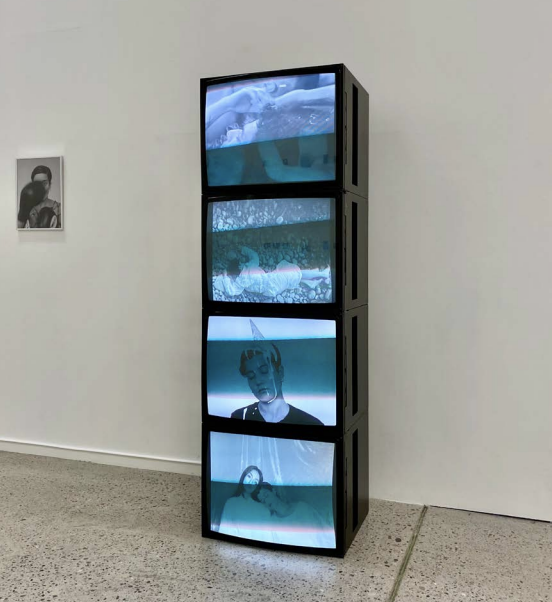
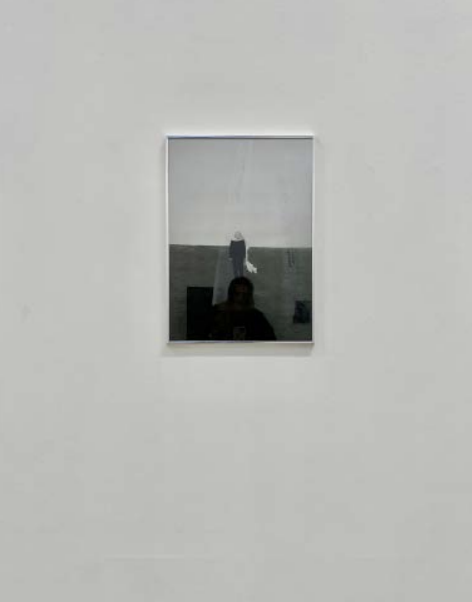
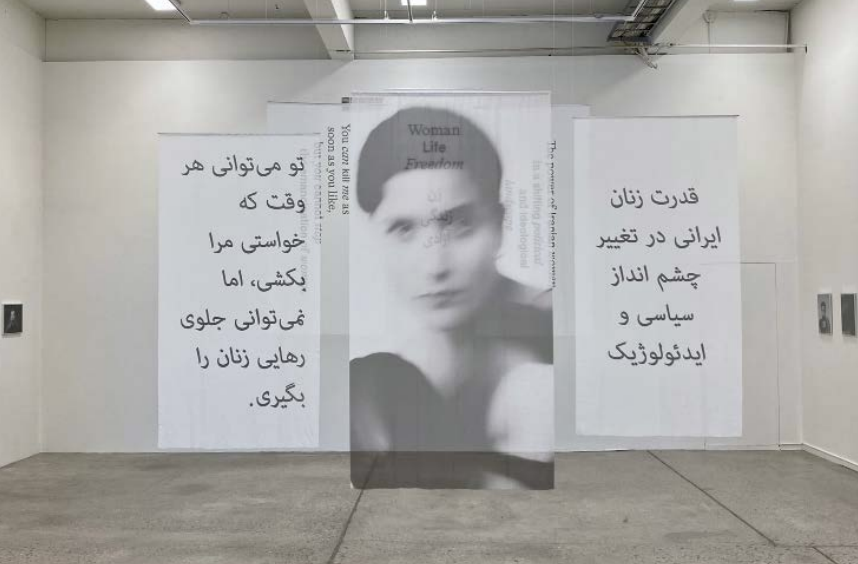
Millions of women have been subjected to repression, imprisonment, fines, and degradation at the hands of the regime just because they do not want to wear hijab. Iran stands as an example of how a system can twist from an open-minded society into a closed society dictated by and made for men. Human rights and democracy should never be taken for granted. Women in Iran grow up in a society that covers their bodies, creativity, and daily movements under the veil of the Islamic Republic of Iran.
Not A Typical Persian Girl seeks to unveil the plight of women and girls in Iran by cataloguing some of the things that are forbidden to them – things like biking, riding a motorcycle, singing, and watching football in a stadium are some examples of everyday enjoyments that are forbidden to women in Iran. But the artwork also attempts to unveil the humour and vibrant spirit with which Persian women and girls confront the constraints placed upon them. The videos and photographs in Not A Typical Persian Girl follow a young woman who symbolises women living in the Islamic Republic of Iran. Even though political power continues to stifle the voices of women, this new generation is fighting back and taking the lead in the protest against the regime.
Ideology, religion, and political agendas foster norms about how a typical woman should behave. Not A Typical Persian Girl fights these agendas by portraying generations of women who fight daily to promote their own ideas about what womanhood can be or should be. Iranian women today are the product of ideological and political fights dating back more than one hundred years. Women have passed down their struggles - rife with both tragedies and triumphs - to subsequent generations, who must take up the torch in new political, religious, and ideological contexts, in which they are used as pawns for the agendas of the powers that be.
___
Atoosa Farahmand (b. 1991) is a Swedish-Iranian artist and producer based in Stockholm (SE) and Oscar Hagberg (b. 1994) is a Swedish artist, graphic designer and art director based in Stockholm (SE). In the project Not A Typical Persian Girl, Farahmand and Hagberg examine the conditions of women in Iran through various expressions. In the Iranian Revolution of 1979, women’s path to liberation and participation in society was brutally severed - a path which had been gradually opening over the preceding decades. Not only was democracy closed to women, it is now also forbidden for women to ride bicycles and motorcycles, to sing, and to watch football matches in a stadium. The artworks on view in the exhibition makes it clear that women’s power, will and humor cannot be stifled. Farahmand and Hagberg see women and girls who defy and fight. They fill their lives with protests in a constant struggle for equality and democracy.
Various forms of the project has previously been exhibited at, amongst others, Villa San Michele (IT), Jönköping City Library (SE) and Galleri Redan (SE), and will in 2026 be exhibited in Stockholm, Berlin, Copenhagen and Oslo.
B Æ R U M K U N S T H A L L
Bærum Kunsthall holder til i den tidligere brannstasjonen vis-a-vis Flytårnet på Fornebu - et område i sterk utvikling, ca. 20 minutter utenfor Oslo.
Adresse: Odd Nansensvei 19, 1360 Fornebu
Reise til kunsthallen
Kollektiv: Buss #31 til Telenor Fornebu, derfra er det ca. fire minutters gange i retning flytårnet.
Bil: En time gratis parkering ved Café Caravelle vis-a-vis kunsthallen.
Alle utstillinger og arrangementer har fri entré.
Åpningstider: torsdag - søndag 12-17
Mandag - onsdag etter avtale mellom 12-16. Ta kontakt for forespørsel om omvisninger eller annet.
NB! Kunsthallen holder stengt i monteringsperiodene. Se program for full oversikt.